

How to Identify Body-Safe Sex Toys for Your Business?
July 12, 2025 by
ellenyi@adultstoysgd.com
Business Beginners Product Knowledge⚠️ The Hidden Dangers in Cheap Sex Toys (And How to Avoid Them)
❌ Problem:
Your customers trust you to supply safe products, but the adult toy market is flooded with items made from questionable materials.
🔥 Agitation:
A single recall due to toxic phthalates or porous materials could:
- Destroy your brand reputation
- Lead to costly lawsuits
✅ Solution:
By understanding body-safe sex toy materials and proper certifications, you can confidently source products that protect both your customers and your business.
🛡️ What Truly Makes a Sex Toy Body-Safe?
Body-safe sex toys must meet three critical criteria:
1️⃣ Non-porous, medical-grade materials (platinum-cure silicone, ABS plastic, surgical steel)
2️⃣ Free from toxins (phthalates, parabens, BPA)
3️⃣ Backed by verifiable certifications (FDA, CE, RoHS)
📌 For wholesale buyers:
- Demand Material Safety Data Sheets (MSDS)
- Verify compliance documentation before purchase
💡 Why This Matters for Your Business
Continue reading to discover:
✔️ The only body-safe materials you should stock
✔️ How to verify manufacturer safety claims
✔️ Red flags in certifications that could risk your business
📋 Key Questions Answered for Professional Buyers
1️⃣ Which materials qualify as truly body-safe?
✅ Priority Materials for Wholesale Purchase:
- Medical-grade silicone (platinum-cure preferred)
- ABS plastic (rigid, non-porous)
- Borosilicate glass (tempered, smooth edges)
- Stainless steel (316L surgical grade)
❌ Avoid:
- "Jelly rubber," TPE/TPR blends
- Materials that feel sticky or emit strong odors
2️⃣ How do I verify material safety claims?
🔍 Due Diligence Checklist:
✅ Material Safety Data Sheets (MSDS)
✅ FDA 21 CFR 177.2600 compliance (for silicone)
✅ Third-party lab reports (SGS, Intertek) for heavy metals & phthalates
✅ CE RoHS 2.0 certification (for EU imports)
💡 Pro Tip: Insist on seeing actual certification documents, not just packaging claims.
3️⃣ What certifications should body-safe sex toys have?
📜 Non-Negotiable Certifications:
- Electrical safety: FCC/CE (for vibrators)
- Material safety: FDA, LFGB, RoHS
- Battery safety: UN38.3 (for lithium-ion products)
- Chemical compliance: REACH, Prop 65 (California sales)
4️⃣ How does packaging indicate safety?
📦 Reliable manufacturers will:
- Use sterile, sealed packaging for insertable toys
- Display material composition on retail packaging
- Provide proper cleaning instructions
5️⃣ What about mechanical safety?
⚙️ Design Elements to Audit:
- Seamless construction (for insertable toys)
- Waterproof ratings (IPX6 or higher)
- Child-resistant battery compartments
🏆 The Bottom Line for Professional Buyers
Protect your supply chain by:
✔️ Insisting on body-safe materials with full documentation
✔️ Reducing liability risks
✔️ Building long-term brand trust
🔗 Need certified samples?
Our factory specializes in FDA-compliant silicone products with complete test reports for wholesale partners.

Latest Articles

July 1, 2026
How Should Brands Choose the Best Lubricant for Their Sex Toy Product Line?
✦ ✦ ✦ For adult wellness brands, lubricant should not be chosen as a random add-on. It should match the
June 30, 2026
Water-Based vs Silicone-Based Lubricants: What Should Adult Wellness Brands Know Before Sourcing?
✦ ✦ ✦ For adult wellness brands, choosing a lubricant is not just a formula decision. It affects product positioning,
May 6, 2026
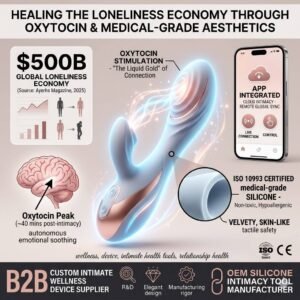
Is the "Liquid Gold" of Oxytocin and Medical-Grade Aesthetics the Ultimate Cure for the Loneliness Economy?
The world is more connected than ever, yet we are starving for intimacy. By 2026, the global "loneliness economy" has

May 3, 2026
Beyond the 180 BPM Spike: How Should Brands Approach Biofeedback Intimate Device Engineering?
✦ ✦ ✦ Wearables have made body data familiar to consumers. Intimate wellness devices create a different engineering question: can