

The Billion-Dollar Alphabet: Decoding the BDSM Encyclopedia for Retailers & Enthusiasts
March 13, 2026 by
ellenyi@adultstoysgd.com
Market ReportIt starts with a whisper, a confused search, or a customer asking for something you’ve never heard of.
Picture this: You are scanning the latest global market trends. You see a massive surge in demand for "alternative lifestyle" accessories—a sector projected to grow exponentially. Yet, when you look at the product list, it looks like a jumbled alphabet soup: BD, DS, SM, TPE, SSC. 😵💫 Do you feel the headache coming on? You aren’t alone. For wholesalers and retailers, mislabeling a product isn’t just an embarrassing faux pas; it’s a fatal business error. You risk alienating a highly loyal, high-spending community that values precision above all else. Imagine stocking "shibari rope" that causes rope burn because you didn’t know the difference between jute and nylon, or marketing a "submissive" collar to a "dominant" demographic. The lost revenue—and the damage to your brand’s reputation—could be catastrophic.
Relax. We’ve got the map. 🗺️
The guide below is not your average dictionary. It is a strategic breakdown of the BDSM lexicon, designed to turn confusion into clarity and curiosity into cash flow. Whether you are a brand buyer looking to expand your SKU list or a curious soul wondering what the buzz is about, this is the only resource you need to navigate the complex, fascinating, and profitable world of BDSM. Buckle up (pun intended).
🟢 What is BDSM? (The Definition You Need for Google)
BDSM is an overarching acronym used to describe a wide spectrum of sexual preferences and interpersonal dynamics related to erotic roleplay and power exchange.
Crucially, BDSM is not a simple sum of "B+D+S+M". It is a compound of three distinct but often overlapping paired concepts:
- B/D (Bondage and Discipline)
- D/s (Dominance and submission)
- S/M (Sadism and Masochism)
Consumers and industry professionals must understand that these pillars can exist independently or intertwined. For example, a practitioner may enjoy Bondage (restraint) without any interest in Pain (Sadism/Masochism). Understanding this separation is vital for accurate product categorization and targeted marketing in the adult wellness sector.
Are you ready to stop guessing and start understanding the psychology behind the purchase? Let’s dive deep into the glossary. 👇
📘 The Pillars of Practice: Core Terminology
1. Bondage & Discipline (BD or B&D)
The Concept:
In the shorthand of the community, BD refers primarily to the physical act of restraint (Bondage) and the regimen of training or punishment (Discipline).
Think of this as the "hardware" of the lifestyle. It focuses on the restriction of movement and simple sensory experiences.
Key Note: This can exist entirely separately from DS (psychological power) or SM (pain).
Community Insight: To the folks who just love the feeling of being tied up but hate the idea of serving a "Master" or feeling pain—this is your tribe. You aren’t "doing it wrong"; you are just a BD specialist.
💼 Industry Insight for Retailers:
- Market Segmentation: BD is often the "entry-level" gateway for vanilla consumers.
- Product Focus: Focus on Beginner Kits. Soft velvet cuffs, under-bed restraint systems, and silk ties are high-volume sellers because they are non-intimidating.
- Material Safety: For "Discipline" implements (like paddles), ensure you stock body-safe materials. Porous materials can harbor bacteria. Verify your suppliers use medical-grade silicone or sealed leather.
2. Shibari (The Art of Rope)
The Concept:
Originating from Japan, Shibari is a specialized branch of BD. Unlike simple restraint meant to hold someone down, Shibari is about the aesthetic and artistic presentation. It is visual poetry using the human body as a canvas and rope as the ink. The focus here is on the beauty of the knots and the suffering/endurance of the model in a suspension.
📊 B2B Buyer’s Note:
- The "Authenticity" Trend: Consumers searching for "Shibari" are specific. They do not want generic nylon rope found at a hardware store.
- Best-Sellers: Stock Jute and Hemp ropes that have been treated (processed with oil to reduce friction burn).
- Cross-Selling: This demographic buys safety shears (to cut rope in emergencies) and suspension rings. It’s a high-ticket accessory niche.
3. Dominance & submission (D/s)
The Concept:
This is the psychological "software" or "operating system" of BDSM. It deals with the exchange of power. The Dominant (Dom) takes control, and the submissive (sub) gives it up.
Crucially, this dynamic is built on Negotiation. Before any play happens, participants discuss hard limits (safe words) and desires.
Community Insight: Guys, listen up. Just because you see a "Domme," it doesn’t mean you can approach without respect. The protocol is everything here. Skipping negotiation is a major red flag in the community.
🛠️ Merchandising Strategy:
- The Psychology of Sales: Products here are symbolic. Collars, leashes, and kneeling pads aren’t just tools; they are symbols of ownership and devotion.
- Quality Check: Metal hardware (O-rings, buckles) on collars must be nickel-free to prevent allergic reactions during long-term wear. High margins exist in "luxury" D/s gear (real leather, gold plating).
4. Sadism & Masochism (S/M)
The Concept:
The realm of sensation.
- Sadist: Derives pleasure (often sexual) from inflicting sensation/pain.
- Masochist: Derives pleasure/satisfaction from receiving sensation/pain.
This isn’t just about physical pain (whips); it includes mental intensity (humiliation). It is the pursuit of physiological release through intensity.
Correction: In the West, the terms "S" and "M" are rarely used as nouns anymore. People prefer "Top" and "Bottom" or "Dom" and "sub."
📉 Trend Alert:
- "Sensation Play" Rebranding: Modern marketing often rebrands S/M as "Sensation Play" to appeal to a broader wellness audience.
- Inventory Tips: Stock a range of intensities. From feather ticklers (sensory) to heavy leather floggers (impact). The "Thud" vs. "Sting" distinction is a common customer question—train your support staff on the difference.
5. Power Exchange & TPE
The Concept:
The voluntary transfer of control. If this exchange is 24/7 with no predefined "stop time," it is called Total Power Exchange (TPE).
Key Differentiator: The absolute core of this is Consent. Without consent, it is abuse. With consent, it is a relationship structure that distinguishes BDSM from history’s slavery.
🛡️ Safety, Care, and Psychology (The "Soft" Skills)
6. Aftercare
The Concept:
The holy grail of a healthy session. After the intensity of a scene, the participants need to "come back to earth." Aftercare involves re-grounding: snuggling, blankets, water, chocolate, and reassurance. It prevents the "drop."
💡 Marketing Opportunity:
- The "Aftercare Kit": Smart retailers are now bundling soft fleece blankets, high-end chocolates, and hydration powders into "Aftercare Box Sets." This is a perfect upsell item that shows your brand cares about user wellbeing.
7. Drop (Sub-drop / Dom-drop)
The Concept:
A chaotic crash in mood following a scene, caused by the sudden depletion of adrenaline and endorphins. It feels like a sudden depression, crying, or emptiness. It can happen to the sub (Sub-drop) or the Dom (Dom-drop).
The Fix: Effective Aftercare.
8. Safeword
The Concept:
A pre-agreed word (like "Red") that instantly stops all action. It is the emergency brake.
Myth Buster: "I don’t need a safeword" is the most dangerous sentence in the lifestyle. Professional Doms always use them.
⚠️ Sourcing Standard:
- Promote products that are easy to release. "Quick-release" mechanisms on bondage gear are not just a feature; they are a safety requirement for reputable sellers.
9. Grandmother Rule
The Concept:
A dress code term for BDSM parties/munches. It means: "Wear street clothes, no requirements for dress up"
10. Vanilla
The Concept:
Anything or anyone NOT involved in BDSM. Standard, conventional sex.
Usage: "I need a purely vanilla night tonight."
👠 Niche Interests & Fetishes (The Long-Tail Market)
11. Body Worship & Boot Worship
The Concept:
Venerating the partner’s body or clothing (boots) through kissing, licking, or kneeling.
- Body Worship: Often confused with foot fetishes, but here the intent is worship/respect for the person, not just sexual gratification from the foot itself.
- Boot Worship: Ritualistic cleaning or kissing of leather. Highly ceremonial.
📈 Niche Strategy:
- Leather Care Products: Selling high-end leather cleaners and conditioners alongside boots isn’t just for shoe stores. In this niche, boot care is part of the ritual.
12. Cuckold & Cuckquean
The Concept:
- Cuckold: A male partner enjoys watching his female partner with another person.
- Cuckquean: A female partner enjoys watching her male partner.
Key element: The "voyeuristic" thrill and sometimes the "humiliation" or "compersion" (joy in another’s pleasure).
13. Pet Play (K-9, Pony Play)
The Concept:
Roleplaying as an animal (Puppy, Pony, Kitten).
Clarification: This is not bestiality. It is humans pretending to be animals to enter a simpler, loyal "headspace."
- Pony Play: Often involves complex "tack" (carts, bits, harnesses) and is dress-up heavy.
🧶 Manufacturing Trend:
- Custom Gear: The market for Neoprene puppy hoods and leather pony harnesses is booming. Neoprene is popular because it is breathable, washable, and colorful.
- Visual Appeal: This category is highly "Instagrammable" (within community guidelines), driving visual search trends.
14. 24/7 Relationships
The Concept:
A Master/slave dynamic that never "turns off." No breaks.
Community Conflict: Often 24/7 practitioners clash with "Lifestyle" players (who switch it on and off), but both are valid.
⚠️ Advanced & Edge Play (Proceed with Caution)
Note to Retailers: Selling associated items requires strict liability disclaimers.
15. Breath Control
The Concept:
Restriction of air (choking).
Safety Warning: Extremely dangerous. The margin for error is zero. We mention it for definitions, but it is high-risk.
16. Edge Play / Knife Play / Needle Play
The Concept:
Activities that push the boundaries of safety and require medical knowledge (like sterile needles).
Requirement: Strict adherence to RACK (Risk-Aware Consensual Kink).
🏥 Seller Responsibility:
- Do not sell "novelty" items for these practices. Only sell medical-grade, sterile equipment if you operate in this niche.
🤔 People Also Ask: Professional Insights
For the Wholesalers and Dropshippers scoping out this lucrative market, here are the answers to the questions keeping you up at night.
1. What are the essential safety certifications for BDSM silicone toys?
- Look for FDA-grade or Platinum-cured Silicone. For the European market, CE and RoHS compliance are non-negotiable to prove the products are free from hazardous substances like lead or phthalates.
2. Is "real leather" always better than "vegan leather" for bondage gear?
- Not necessarily. While "Old School" leather culture prizes genuine hide for its durability and smell, Vegan Leather (PU/PVC) is trending due to lower price points, ease of cleaning (sanitary reasons), and ethical consumerism. Stock both to cover all bases.
3. How do I market "Impact Play" items without getting banned on advertising platforms?
- Language is key. Avoid terms like "pain," "torture," or "abuse." Instead, use "sensation," "intensity," "massage," or "wellness." Focus on the material quality rather than the act.
4. What is the difference between specific TPE and Silicone for dolls or toys?
- TPE (Thermoplastic Elastomer): Softer, more porous (harder to sterilize), cheaper. Good for "flesh-like" feel.
- Silicone: Non-porous (can be boiled/sterilized), hypoallergenic, more expensive, lasts longer. Pros buy silicone.
5. What is the "SSC" principle mentioned in product manuals?
- It stands for Safe, Sane, and Consensual. It is the traditional motto of the community. However, RACK (Risk-Aware Consensual Kink) is becoming the preferred legal/community standard for edge play items.
6. Why are "starter kits" high-conversion items?
- Decision paralysis. Beginners are overwhelmed by the terminology (as seen above!). A curated box labeled "The Weekend Explorer Kit" removes the guesswork and increases average order value (AOV).
7. Is there a B2B market for "Aftercare" products?
- Yes, and it is untapped. Bundling lube, toy cleaner, and a soft robe as a "Post-Session Care Package" distinguishes high-end brands from generic sellers.
✨ Conclusion
Knowledge is the ultimate safety word.
Whether you are exploring your own desires or sourcing products for a growing business, understanding the distinct pillars of BDSM—Bondage, Discipline, Dominance, Submission, Sadism, and Masochism—is the foundation of success. The market is moving away from cheap, novelty gags toward high-quality, safe, and consensual wellness. By respecting the definitions, the materials, and the psychology outlined in this encyclopedia, you position yourself not just as a participant, but as a leader in a sophisticated global community.

Latest Articles
July 1, 2026
How Should Brands Choose the Best Lubricant for Their Sex Toy Product Line?
✦ ✦ ✦ For adult wellness brands, lubricant should not be chosen as a random add-on. It should match the
June 30, 2026
Water-Based vs Silicone-Based Lubricants: What Should Adult Wellness Brands Know Before Sourcing?
✦ ✦ ✦ For adult wellness brands, choosing a lubricant is not just a formula decision. It affects product positioning,
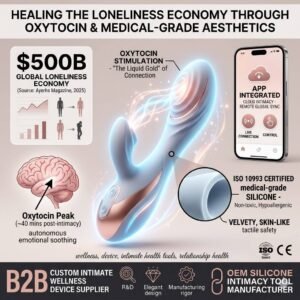
May 6, 2026
Is the "Liquid Gold" of Oxytocin and Medical-Grade Aesthetics the Ultimate Cure for the Loneliness Economy?
The world is more connected than ever, yet we are starving for intimacy. By 2026, the global "loneliness economy" has
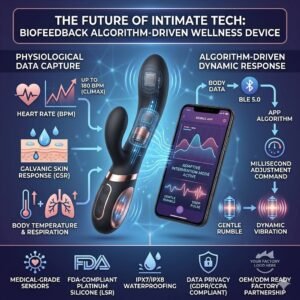
May 3, 2026
Beyond the 180 BPM Spike: How Should Brands Approach Biofeedback Intimate Device Engineering?
✦ ✦ ✦ Wearables have made body data familiar to consumers. Intimate wellness devices create a different engineering question: can