

Is the 180 BPM Threshold the Ultimate Future of Women's Wellness Tools? When Biofeedback Algorithms Meet Intimate Tech OEM/ODM?
May 3, 2026 by
ellenyi@adultstoysgd.com
Market ReportIs the 180 BPM Threshold the Ultimate Future of Women’s Wellness Tools? When Biofeedback Algorithms Meet Intimate Tech OEM/ODM?
The "Quantified Self" movement has completely taken over our lives. We track our deep sleep, we count our daily steps, and we monitor our caloric burn with incredible precision. Yet, the most intense and primal aspect of human health—our intimate wellness—remains totally in the dark. Right now, most sexual wellness products on the market just blindly vibrate at a fixed speed. They do not know the user’s body, they cannot react to sudden arousal spikes, and frankly, consumers are getting bored of this one-sided, robotic experience. If your brand is still only sourcing "dumb" hardware, you are actively losing market share to tech-savvy competitors. The ultimate solution? Enter the biofeedback intimate device. By merging medical-grade sensor technology with dynamic app algorithms, we can finally turn passive hardware into a living, breathing, adaptive ecosystem that responds to the body’s real-time desires.
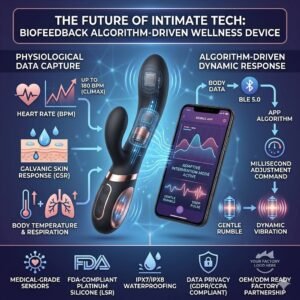
What happens when intimate tech genuinely meets algorithms? A biofeedback intimate device deeply integrates medical-grade sensors into a body-safe silicone shell to track sudden physiological shifts—like a heart rate skyrocketing to 180 BPM. It then uses real-time mobile app algorithms to automatically adjust motor frequency and intensity based on that live data. This creates a highly personalized, closed-loop sexual wellness experience, instantly transforming a standard pleasure product into an intelligent, adaptive therapeutic tech gadget.
But how exactly does a soft piece of silicone accurately read a racing heart, and more importantly, who actually has the manufacturing chops to build this without it breaking down? Let’s dive deep into the hardware secrets and biological data nobody in the supply chain talks about. 🚀
📊 Core Section 1: Decoding the Hardcore Physiological Metrics of Peak Arousal
To build a truly smart women’s wellness tool, an algorithm needs raw, accurate data. You cannot fake body language when it comes to peak physical intimacy. When a user approaches climax, their body undergoes massive, measurable, and explosive autonomic nervous system changes. As a top-tier intimate health device manufacturer, we design our sensor arrays to capture these exact milestones.
- Heart Rate (BPM) – The Exponential Climb: A normal resting heart rate sits casually between 60 to 80 BPM. But as physical arousal builds, the cardiovascular system goes into overdrive. The heart rate climbs aggressively, crossing the 110 mark and frequently peaking between 150 to 180 BPM during climax (Masters & Johnson, 1966 – Human Sexual Response). This massive, exponential spike is the ultimate trigger metric for our smart algorithms.
- Galvanic Skin Response (GSR) – The Electrical Truth: You can control your breathing, but you cannot control your sweat glands. As the sympathetic nervous system fires up, the micro-moisture on the skin increases, causing a dramatic change in skin conductance (Levin, 1992 – The mechanisms of human female sexual arousal). Our highly sensitive biometric pads pick up this electrical variance, telling the micro-controller exactly how excited the nervous system is in real-time.
- Temperature and Respiration Peaks: The human engine runs hot when pushed. Surface body temperature typically rises by 0.5°C to 1.5°C in localized areas, while respiration rates can spike to a frantic 40 breaths per minute—a state known as sex-induced hyperventilation (Exton et al., 1999 – Cardiovascular and endocrine alterations after masturbation-induced orgasm in women).
By feeding this precise tri-factor data (BPM, GSR, Temperature) into an AI chip, we stop guessing what the consumer wants. The body literally tells the device exactly what to do.
⚙️ Core Section 2: The Closed-Loop Ecosystem – From "Blind Output" to "Smart Feedback"
Let’s look at the real-world user scenario. Imagine a user syncing their brand-new wearable pleasure device with their smartphone. This is no longer a traditional remote-control toy; this is a high-tech smart sensor tech ecosystem.
First, the embedded medical-grade sensors rest flush against the sensitive skin. The moment the user’s heart rate crosses 110 BPM, the Bluetooth 5.0 Low Energy (BLE) module instantly transmits this encrypted data packet to the native smartphone App.
Here is where the magic happens. The algorithm brain wakes up. It reads the data and realizes, "The user is approaching the threshold, they need more intensity right now."
In a matter of milliseconds, the app sends a command back to the device to shift the dual-tungsten motors from a gentle rumble to a deep, resonant pulse. If the GSR sensors detect the arousal dropping, the app automatically softens the vibration to build anticipation again. This creates a flawless, thousand-person-thousand-faces "adaptive intervention scheme." It is a completely hands-free, personalized journey that adapts to their unique biological rhythm in real-time. Consumers want personalization, and this closed-loop biofeedback system delivers exactly that.
🏭 Core Section 3: The "Deep Water Zone" of Tech Implementation (Factory Hard Power)
Ideas are cheap. Executing this level of hardware engineering is insanely difficult. This is the "deep water zone" of the adult tech industry, and it separates the cheap assembly lines from a true, high-end smart sex toy OEM/ODM in China.
Why is it so hard to build?
- The Softness vs. Accuracy Dilemma: You have to plant rigid, highly sensitive biometric sensors into ultra-plush, dual-density Liquid Silicone Rubber (LSR). If the silicone is too thick, the sensor cannot read the heart rate. If it is too thin, it tears.
- The IPX7 Waterproofing Nightmare: These products must be absolutely waterproof (IPX7 or even IPX8) so users can wash them or use them in the bath. Creating a seamless seal between metal sensor contact points and soft medical-grade silicone—without water creeping in and destroying the motherboard—requires an incredibly high manufacturing barrier.
This exact challenge is our absolute greatest strength. As a premium manufacturer, our core value lies in seamlessly blending precise medical-grade manufacturing processes with durable consumer electronics. We understand international quality demands (CE, RoHS, FCC, FDA-grade materials). We handle the complex PCB miniaturization, the advanced sensor calibration, and the flawless silicone overmolding under one roof. When you drop-ship or source weak hardware, your brand dies on Amazon. But when you partner with a top-tier factory that understands algorithmic integration, you build a legacy brand that commands premium pricing.
💡 People Also Ask (B2B Buyer Focused Q&A)
Here are the most critical questions smart brand buyers and product managers ask when sourcing advanced biofeedback intimate tech:
Q1: What is the MOQ (Minimum Order Quantity) for full OEM/ODM smart app-enabled devices?
Generally, for a completely custom mold (ODM) with smart sensor integration, MOQs start around 2,000 to 3,000 units to cover the rigorous PCB design and app SDK integration costs. For white-labeling our existing smart models (OEM), MOQs can be much lower, often starting at 500 units.
Q2: How do you handle user data privacy with these smart apps?
Data security is paramount. We develop apps that utilize localized SDK processing or highly encrypted cloud servers (AWS with GDPR/CCPA compliance). The biometric data is strictly anonymized; it controls the device hardware locally and never ties back to a user’s personal identity.
Q3: Can your factory integrate the hardware with our brand’s existing health app?
Absolutely. We provide open APIs and comprehensive SDK documentation. Your in-house software developers can effortlessly bridge our hardware’s Bluetooth sensor data directly into your established iOS or Android ecosystem.
Q4: How do you guarantee the accuracy of the BPM and temperature sensors inside silicone?
We use exposed, bio-compatible stainless steel or gold-plated contact points that sit perfectly flush with the silicone surface. This ensures zero interference. We calibrate every sensor batch against standard medical pulse oximeters during the IQC (Incoming Quality Control) phase.
Q5: Is it truly 100% waterproof if there are metal sensors on the outside?
Yes. We utilize advanced double-injection molding and ultrasonic welding techniques. The sensor arrays are hermetically sealed into the inner PC/ABS chassis before the final silicone overmolding process. Every single unit passes a rigorous sub-mersion vacuum test for guaranteed IPX7/IPX8 ratings.
Q6: What is the typical lead time for an OEM smart wearable project made in China?
For an OEM project using an existing shell but customizing the App UI and packaging, expect 35-45 days. For a ground-up ODM project requiring new 3D design, tooling, PCB layout, and algorithm tuning, the timeline is typically 75 to 90 days from concept to final mass production.
Q7: Do you use body-safe materials that meet international standards?
Strictly. We only use platinum-cured Liquid Silicone Rubber (LSR) and FDA-compliant materials. Every batch comes with biocompatibility test reports, ensuring the final product easily passes US and EU retail compliance audits.
Algorithms and intimate hardware are no longer parallel lines; they have officially intersected to create the ultimate personalized wellness experience. By partnering with a factory that masters this biofeedback technology, your brand isn’t just selling another toy—you are selling the future of human connection.

Latest Articles
May 6, 2026
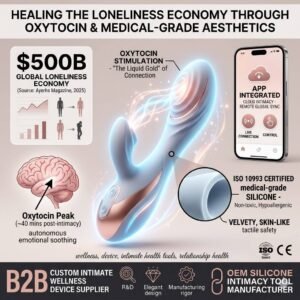
Is the "Liquid Gold" of Oxytocin and Medical-Grade Aesthetics the Ultimate Cure for the Loneliness Economy?
The world is more connected than ever, yet we are starving for intimacy. By 2026, the global "loneliness economy" has
May 3, 2026
Is the 180 BPM Threshold the Ultimate Future of Women's Wellness Tools? When Biofeedback Algorithms Meet Intimate Tech OEM/ODM?
内容 隐藏 Is the 180 BPM Threshold the Ultimate Future of Women’s Wellness Tools? When Biofeedback Algorithms Meet Intimate Tech
April 30, 2026
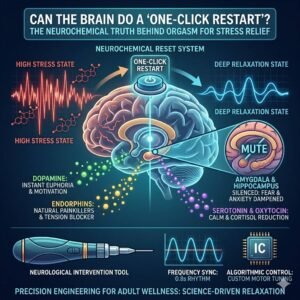
The Neurochemical Truth Behind Amygdala Silencing and Orgasm for Stress Relief?
Do you know what modern city dwellers fear the most? It is not failing at an interview. It is the
April 25, 2026
How Can a Top Sexual Wellness OEM Manufacturer China Transform Deep Self-Care?
Traditional healing methods are failing. High-stress professionals try aromatherapy. They try mindfulness meditation. They listen to nature sounds. But nothing