

Private Label Air Pulse Vibrator Development With a Patented Piston Structure
Develop a private label air pulse vibrator around a clearly documented piston-driven pressure system, with model selection, customization, technical communication, sampling, packaging coordination, and bulk production planning.
A Documented Air-Pulse Direction for B2B Product Teams
Kenier Co supports brands, wholesalers, distributors, and marketplace sellers developing air-pulse products around a defined internal structure. The piston-driven system is covered by granted European patent EP 4 299 046. A corresponding U.S. utility application, No. 17/864,703, remains pending based on the documents currently available.
Patent status should always be described by jurisdiction. Buyers should also complete any market-specific legal review required for their final product.
Build Around a Defined Internal Structure
Air-pulse products are often grouped together because they use repeated pressure changes to create a rhythmic output. Their internal systems and final output structures can still be different. For a brand buyer, those differences affect product performance, technical communication, patent review, sample approval, and production control.
This solution uses a drive system with a solid piston. A linear motor moves the piston back and forth inside a chamber. Each piston stroke creates a controlled pressure change inside the connected air path. Depending on the final product structure, these repeated pressure pulses can be delivered through a flexible silicone nozzle or used to drive a separate rhythmic movement, such as a patting structure.
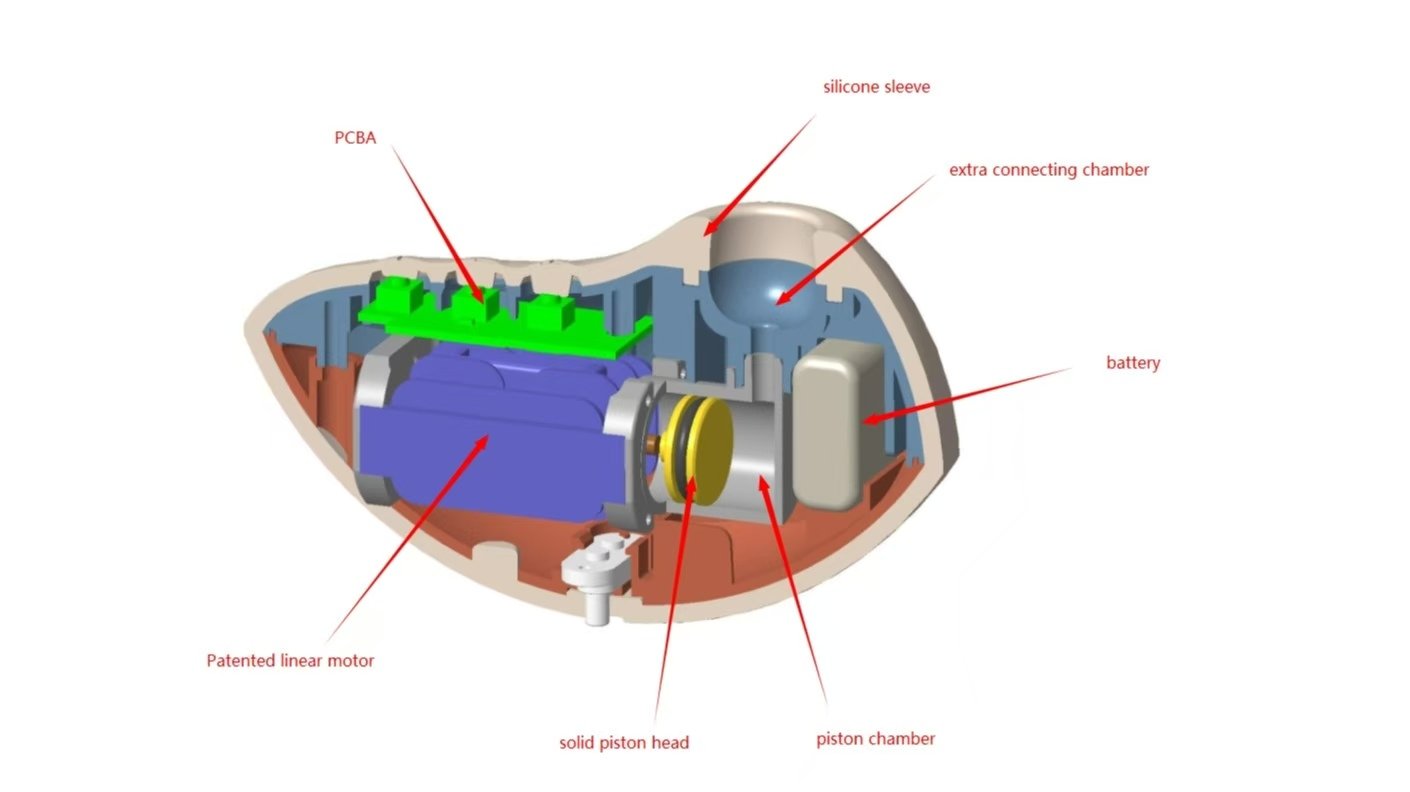
Core structure for model-level review
How the Piston-Driven Air-Pulse System Works
Linear Drive
A linear drive system moves a solid piston back and forth inside a defined chamber.
Alternating Pressure
Each piston stroke changes pressure inside the connected air chamber and pressure path without depending on a one-way or check valve.
Product-Specific Output
The repeated pressure pulses can act through a flexible nozzle or drive a confirmed patting or flapping component.
Simplified operating explanation. The actual piston, sealing structure, chamber, pressure path, and final output must be confirmed for each model.
What Does the European Patent Cover?
European patent EP 4 299 046 carries the official English title Sucking and Air Blowing Structure and Massaging Device. The title is retained here only because it is the formal name of the patent publication. For product and buyer communication, this page uses air-pulse technology, which more accurately describes the repeated pressure output experienced through the finished product.
The independent claim describes a driving device with a piston, a venting device defining a cavity, and linear reciprocation of the piston to create alternating pressure effects through an air outlet. In product-development language, the core principle is the repeated pressure pulse generated by piston movement—not a simple continuous stream of blown air.
The patent was granted on April 17, 2024. The corresponding U.S. utility application, No. 17/864,703, was filed in July 2022 and should be described as pending unless newer official grant information becomes available.
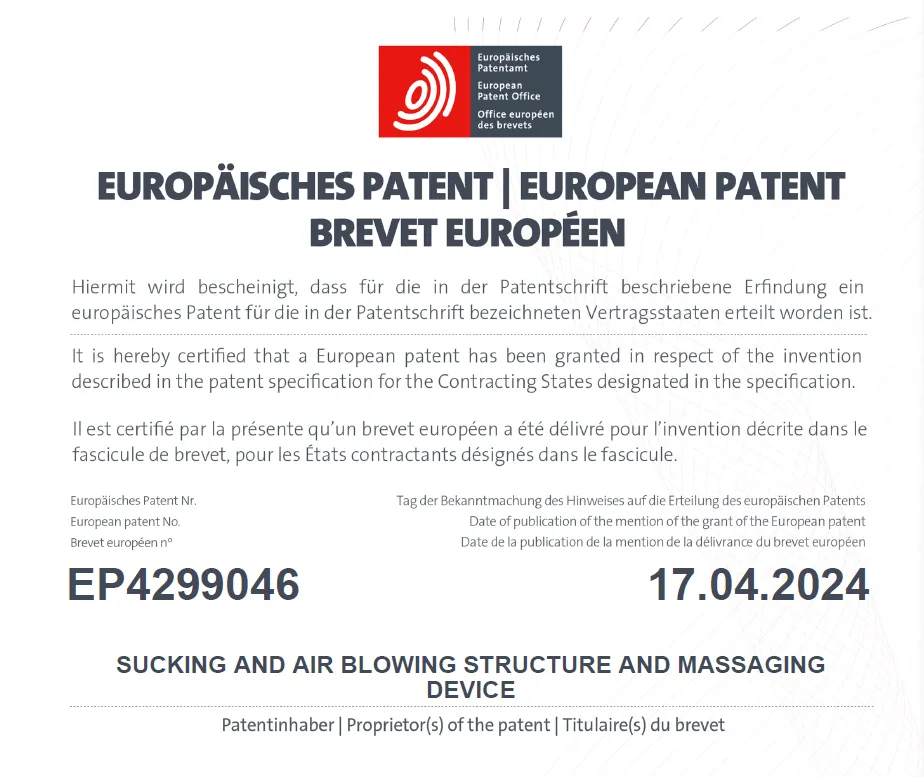
Existing directions and custom development
Which Product Directions Can Brands Develop?
Kenier Co can discuss existing product directions and suitable OEM/ODM changes according to brand position, target channel, price level, quantity, and technical requirements. The goal is not to force every buyer into one fixed SKU.
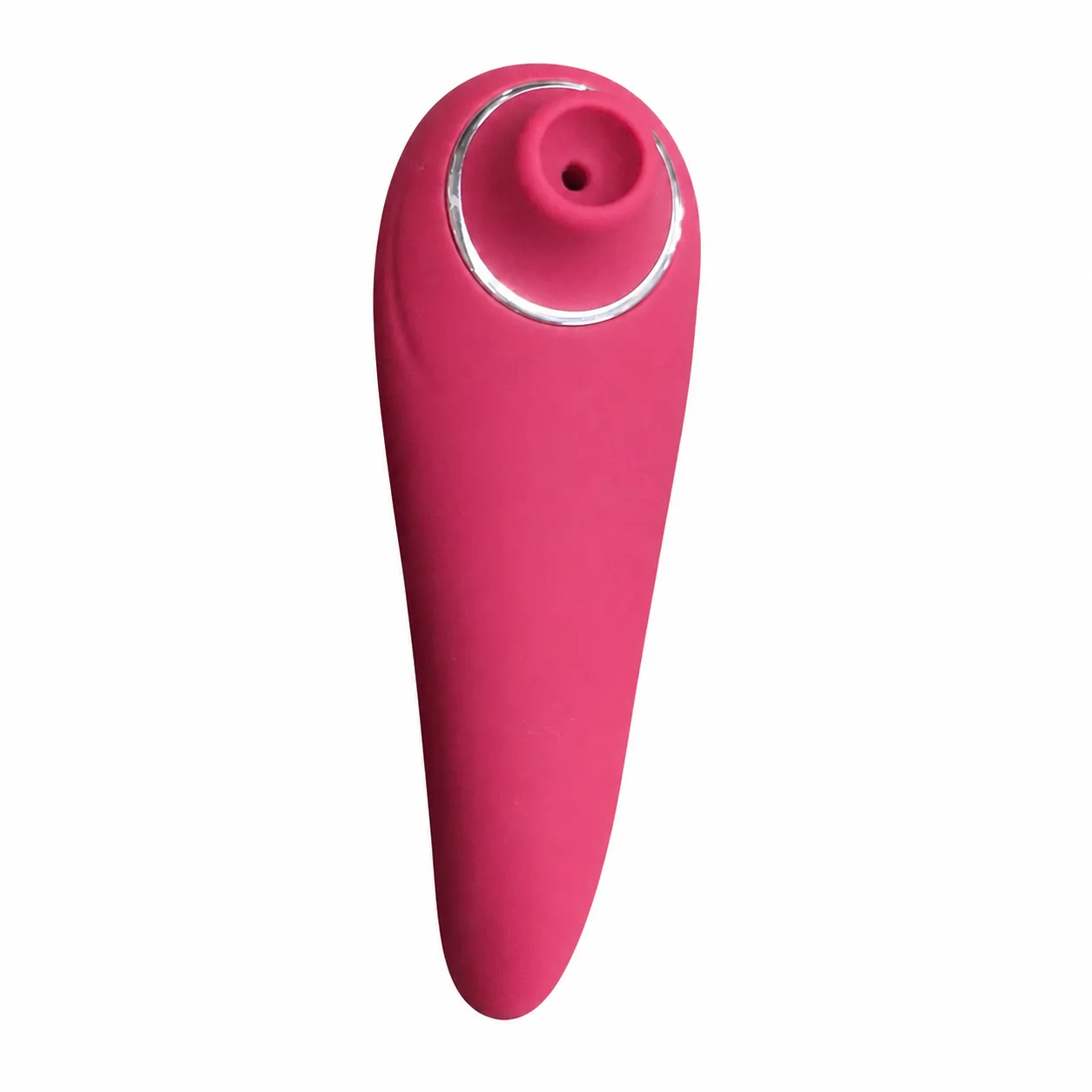
Compact Air-Pulse Products
Suitable for entry collections, travel-oriented ranges, gift sets, and discreet wellness positioning. Buyers can compare shell geometry, grip, button position, nozzle shape, control logic, charging, finish, and packaging.
Palm-Size Air-Pulse Products
A broader contact area, easy hand control, and a more substantial retail presentation may suit this direction. The internal mechanism should be confirmed rather than inferred from the external shape.
Air-Pulse and Vibration Combinations
Suitable projects may combine piston-driven pressure changes with vibration. Sampling should review motor placement, vibration transfer, noise, controls, battery demand, heat, and waterproof construction.
Air-Pulse Rabbit and Multi-Function Directions
A nozzle-based air-pulse function may be combined with an insertable or vibrating section, subject to model-specific review of structure, electronics, ergonomics, charging, controls, assembly, and consistency.
Air-Driven Patting and Flapping Structures
The piston-driven pressure principle can also drive a rhythmic moving component. A rabbit direction may use a patting external arm while the main body provides vibration or an insertable function.
Model-Specific Engineering Review
Patting projects require confirmation of the pressure-transfer path, movement range, frequency, contact shape, sound, heat, durability, waterproof construction, electronics, assembly, and safe clearance.
Only models confirmed to use the documented piston-driven pressure mechanism should be presented under this solution. Buyers comparing these concepts with other female categories can also review Kenier Co’s custom female adult toy development options.
What Can Be Customized for Private Label?
Customization depends on the selected model and project scope. Suitable existing-mold or OEM/ODM projects may discuss:
- Product color and Pantone matching
- Logo position and application method
- Silicone feel or hardness where supported
- Product shell and external appearance
- Nozzle shape or patting contact geometry
- Operating modes and control logic
- Vibration combination and motor settings
- Electronic and charging components
- Accessories, manual, and product bundle
- Private label packaging and presentation
Changes to the piston, chamber, seal, nozzle connection, patting component, drive system, or pressure path require additional engineering review. They may affect pressure performance, movement, durability, waterproof construction, patent mapping, and applicable documents.
For a wider range, use the adult wellness product planning page to coordinate air-pulse products with other product categories.
Which Documents Can Buyers Request?
Document availability must be confirmed by model, target country, battery structure, customization scope, and buyer requirements. A project review may include:
- European patent publication and grant information
- U.S. patent-application information
- Simplified mechanism or cross-section diagram
- Operating-principle explanation
- Selected-model mechanism confirmation
- Product specification and approved sample record
- Available material documentation
- Battery shipping documents where applicable
- Available finished-product testing discussions
- Packaging, manual, label, and commercial documents
A controlled path from brief to production
From Product Brief to Bulk Production
Define the Market and Product Role
Share target countries, channels, price position, expected quantity, product direction, timing, and document requirements.
Select Models and Confirm the Mechanism
Shortlist by size, function, output, controls, charging, and packaging, then confirm the documented piston system and final output type.
Set the Customization Boundary
Separate cosmetic private label changes from functional or structural development and tooling work.
Review and Approve Samples
Check pulse consistency, nozzle or patting behavior, controls, sound, heat, charging, runtime, finish, construction, and packaging.
Confirm Documents and Packaging
Match the model with available patent, material, battery, product, label, manual, and shipping documents.
Control Bulk Consistency
Use the approved sample, bill of materials, structure specification, functional requirements, artwork, and inspection criteria as references.
Project scope, sampling steps, testing, documents, and timing depend on the selected model and approved customization requirements.
What Should the Sample Prove?
An attractive first unit is not enough. Sample approval should show that the product can support the intended brand position and production specification.
- Pulse stability across modes
- Nozzle release or patting movement
- Operating noise and vibration transfer
- Heat during the planned operating cycle
- Button and control response
- Charging and battery performance
- Waterproof construction when specified
- Surface, seams, finish, and cleanability
- Color, logo, accessories, and packaging
- Repeatability across multiple samples
If a structural change is made after sample approval, review the mechanism and documents again before bulk production.

How Is Bulk Consistency Controlled?
Production products should match the approved mechanism and sample. Relevant checks can include incoming material inspection, production inspection, assembly inspection, function testing, charging checks, waterproof testing where applicable, aging review, surface inspection, and packaging confirmation.
The final inspection scope should be matched to the specific model and purchase requirements. Not every report or test applies to every SKU, so document availability and test scope should be confirmed before the order is finalized. Kenier Co’s adult toy factory capabilities provide more information about engineering, materials, electronics, packaging, and quality-control support.
How Can Brands Position the Product for Retail?
Packaging and product pages should explain verified functions without making absolute legal or performance promises.
| Use evidence-based wording | Avoid unsupported wording |
|---|---|
| Piston-driven air-pulse mechanism | Patented worldwide |
| Repeated pressure pulses through a defined nozzle or patting structure | Guaranteed non-infringing |
| Granted European patent and pending U.S. application, with jurisdiction stated | Approved by Amazon |
| Model-specific modes, private label color, logo, and packaging | Safe from every patent complaint |
Retailers, wholesalers, and distributors should receive consistent product names, specifications, instructions, patent references, and model information so that marketing language does not extend beyond the supplied evidence.
Why supplier-side technical records matter
Supplier Documentation in a Real Amazon Patent Complaint
Around four years ago, an Amazon listing operated by one of our private-label customers was removed following a patent complaint from Womanizer. The customer managed the Amazon account and communicated directly with the complainant. Kenier Co supplied the requested patent documents, internal structure information, and an explanation of the piston-driven operating principle.
The customer later confirmed that Womanizer accepted the explanation of the structural differences and withdrew the complaint. Amazon then restored the listing.
Who Is This Air-Pulse Solution For?
- Private label sexual wellness brands seeking differentiation
- Established brands evaluating a new air-pulse direction
- Wholesalers and distributors building a documented range
- Importers coordinating products, packaging, and documents
- Retailers seeking channel-appropriate product information
- Marketplace sellers preparing supplier records
- OEM/ODM teams developing custom appearance or functions
- Buyers comparing existing models with new development
The right starting point depends on whether the buyer needs an existing product direction, cosmetic private label changes, deeper functional adjustment, or a new development project.
Frequently Asked Questions
Is the air-pulse piston structure patented?
European patent EP 4 299 046 was granted on April 17, 2024. A corresponding U.S. utility application, No. 17/864,703, remains pending based on the available documents.
Does every Kenier Co air-pulse or patting product use this structure?
No assumption should be made across the full catalogue. The piston mechanism, final output structure, and patent mapping must be confirmed for each selected model.
Can the product be sold under a buyer’s own brand?
Private label color, logo, packaging, manuals, and other suitable changes can be discussed according to the model and order requirements.
Can buyers change the shell, nozzle, or patting structure?
Suitable appearance, nozzle, and patting-component changes may be discussed, but structural changes require engineering, performance, durability, and patent-mapping review.
Does the patent guarantee freedom to operate?
No. Buyers should obtain any market-specific FTO or legal opinion required for the final product and target country.
Can Kenier Co support Amazon documentation requests?
Kenier Co can provide available supplier-side patent, mechanism, model, and commercial documents. The brand manages its own marketplace account, legal review, and complaint response.
What should buyers send before requesting samples?
Send the target markets, sales channels, shortlisted product direction, expected quantity, customization scope, packaging level, document needs, and launch schedule.
Request an Air-Pulse Product Review
Send Kenier Co your target market, sales channel, quantity, preferred product direction, customization needs, packaging requirements, and document checklist. We can then confirm suitable models, available technical information, sample scope, and the next OEM/ODM step.