

How We Reduced Hand Numbness in a Wand Massager with a Vibration-Isolated Motor System
A private-mold development case for a U.S. sexual wellness brand
The Customer’s Problem
A U.S. sexual wellness brand approached Kenier with a problem that could not be solved by simply selecting a stronger motor. Its wand massager delivered powerful output, but too much of that vibration traveled into the handle. Users reported hand discomfort or numbness after holding the product for only a few minutes. The brand also received complaints about operating noise and a sharp, high-frequency “buzzy” feel rather than the deeper vibration customers expected.
The product had an average customer rating of 3.9 out of 5. We do not attribute every negative review to one issue, but the feedback made three priorities clear: reduce unwanted handle vibration, improve vibration quality, and control noise without weakening the massage head.
The customer needed a structural solution that would keep strong vibration where users wanted it—in the massage head—while greatly reducing the vibration reaching the hand.
Why Conventional Wand Structures Transfer Vibration
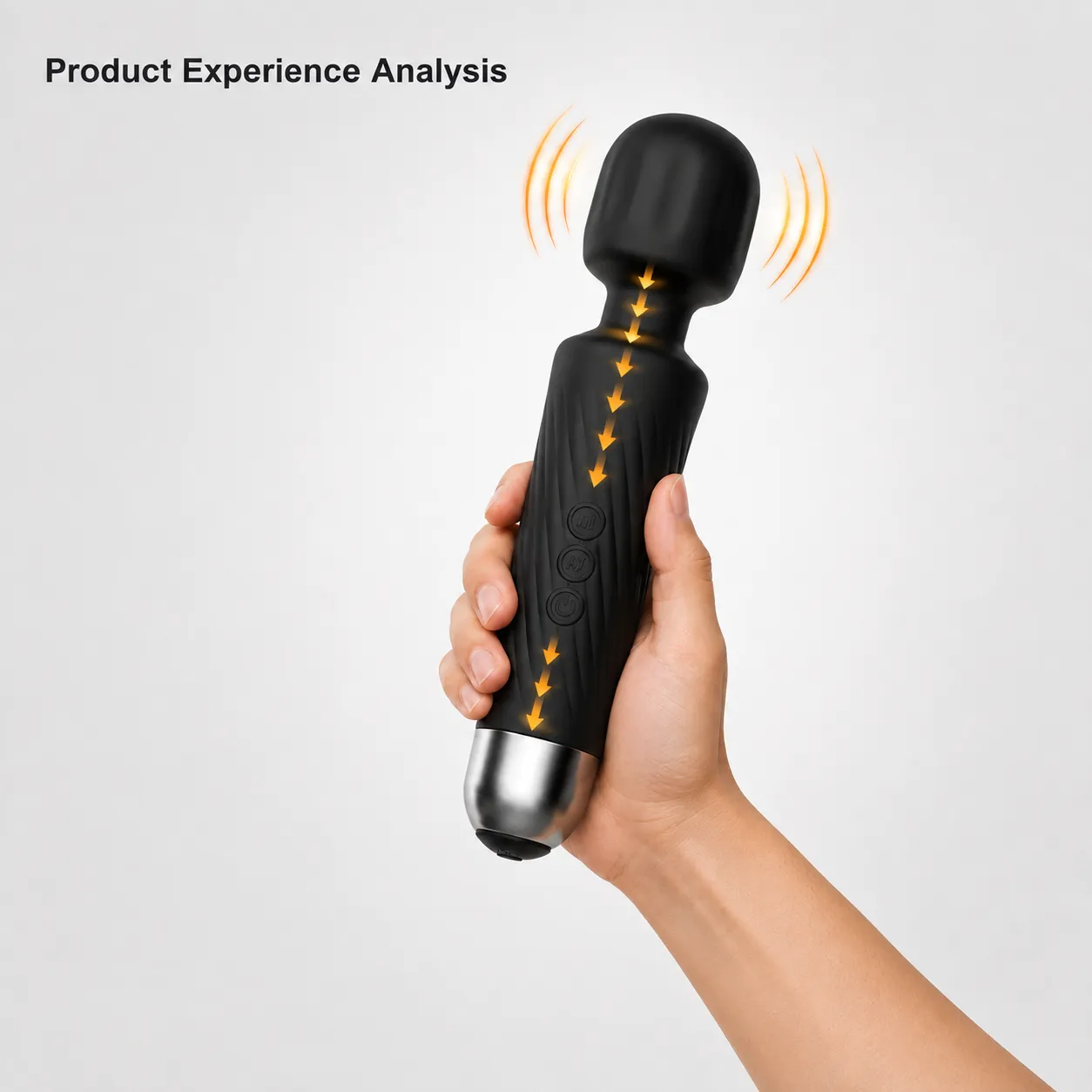
In most conventional wand massagers, the motor is already installed inside the massage head. It drives an eccentric weight, and the resulting imbalance generates the vibration users feel during operation.
The main difference between a conventional wand and Kenier’s upgraded design is therefore not the motor position. It is the vibration transmission path between the head and the handle.
In a conventional design, the head assembly and handle are joined through a relatively rigid internal structure. This is simple, reliable, and cost-effective, but it also gives vibration a direct path from the head into the grip area. The outer silicone can make the handle softer to touch, yet it cannot stop vibration traveling through the rigid internal parts.
At higher settings, unwanted feedback becomes more noticeable. Users may experience tingling, fatigue, discomfort, or numbness after several minutes. Increasing motor speed may also sharpen the sensation, raise operating noise, and increase hand fatigue.
Engineering development since 2019
What We Tried—and Why It Did Not Work
Our work began with samples for a Danish brand seeking lower handle vibration. That project did not proceed to production, but it showed that the underlying problem was structural rather than cosmetic. We continued testing.
Add Internal Cushioning
Cushioning absorbed a limited amount of vibration, but the main head-to-handle path remained rigid. During continuous use, the handle still received too much vibration.
Increase Silicone Thickness
A thicker cover improved surface comfort but did not isolate the handle from vibration traveling through the internal structure. Surface softness and structural isolation are different.
Use a Larger, Slower Motor
The deeper and heavier vibration feel improved, but motor selection alone could not solve the direct transmission path into the handle.
Improve the Eccentric System
The vibration feel improved and some unwanted feedback fell, but this intermediate prototype still had a direct structural path. This was not the final isolated design.
The Final Engineering Solution
Kenier’s final solution combined a head-mounted motor and eccentric vibration assembly with a flexible shaft transmission and vibration-isolation structure.
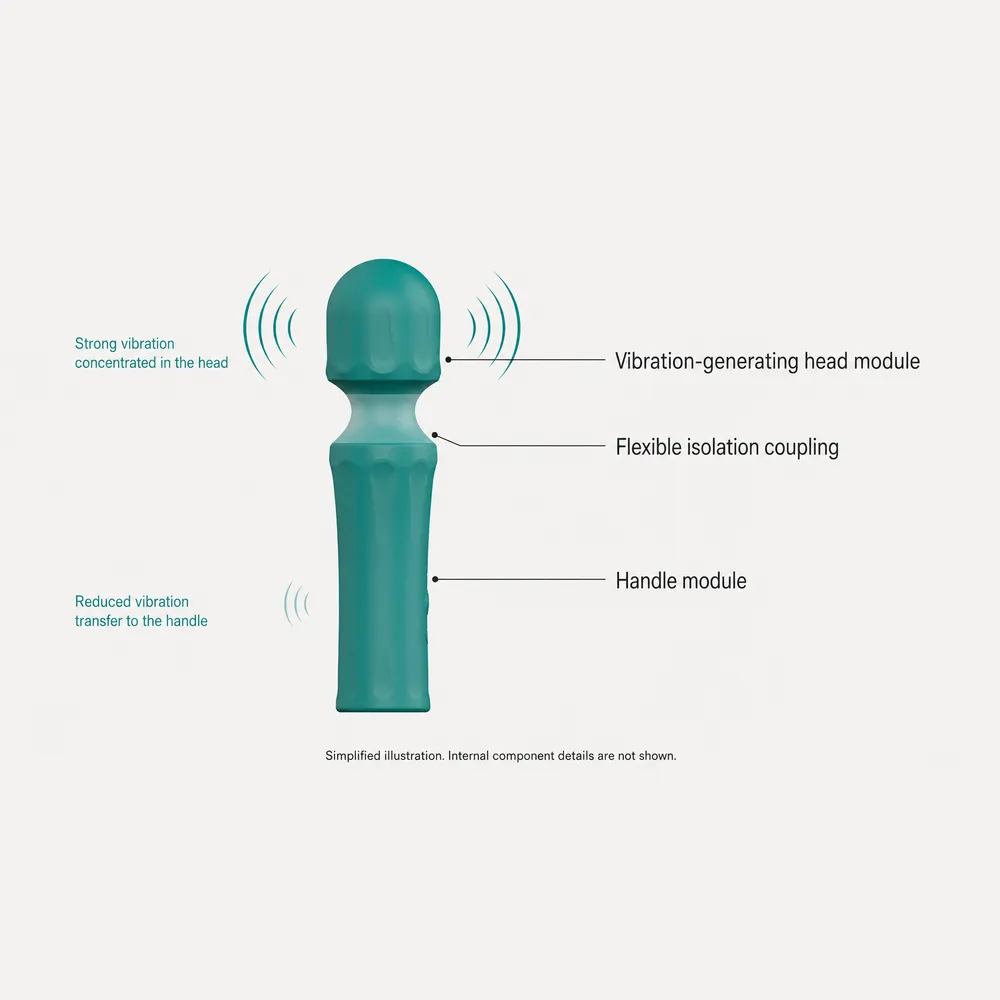
Both conventional wand massagers and our upgraded design place the motor in the massage head. The key difference is how the vibrating head module connects to the handle module. Instead of allowing vibration to pass through one rigid internal structure, our design mechanically decouples the head and handle.
A flexible connection between the modules uses selected elastic and supporting components to create a controlled buffer. The flexible shaft structure provides the required transmission while helping absorb and isolate much of the vibration that would otherwise travel into the user’s hand.
Internally, we sometimes refer to this as our “separated motor” structure. For customers, the more accurate description is a vibration-isolated motor system with a mechanically decoupled head-and-handle structure.
Even at the highest setting, the handle still provides normal operating feedback. However, the new structure greatly reduces the strong, uncomfortable vibration associated with a conventional rigid connection. Testers operated the upgraded wand for 30 minutes—including at high settings—without experiencing the previous hand numbness.
Mechanically decoupled head-and-handle structure
How the Vibration-Isolated System Works
Head Module
The motor and eccentric vibration assembly remain inside the massage head, where the product needs its strongest output.
Flexible Isolation Connection
The flexible shaft transmission and isolation structure changes the direct vibration path and absorbs much of the unwanted energy.
More Comfortable Handle
Strong performance remains concentrated in the head while substantially less unwanted vibration reaches the grip area.
Simplified illustration and explanation. Internal component details are not shown.
From a “Buzzy” Feel to a Deeper Vibration
Motor power alone does not determine whether a wand massager feels premium. Very high motor speed can create a sharp, surface-level sensation that users often describe as “buzzy.” It can also increase noise and unwanted handle feedback.
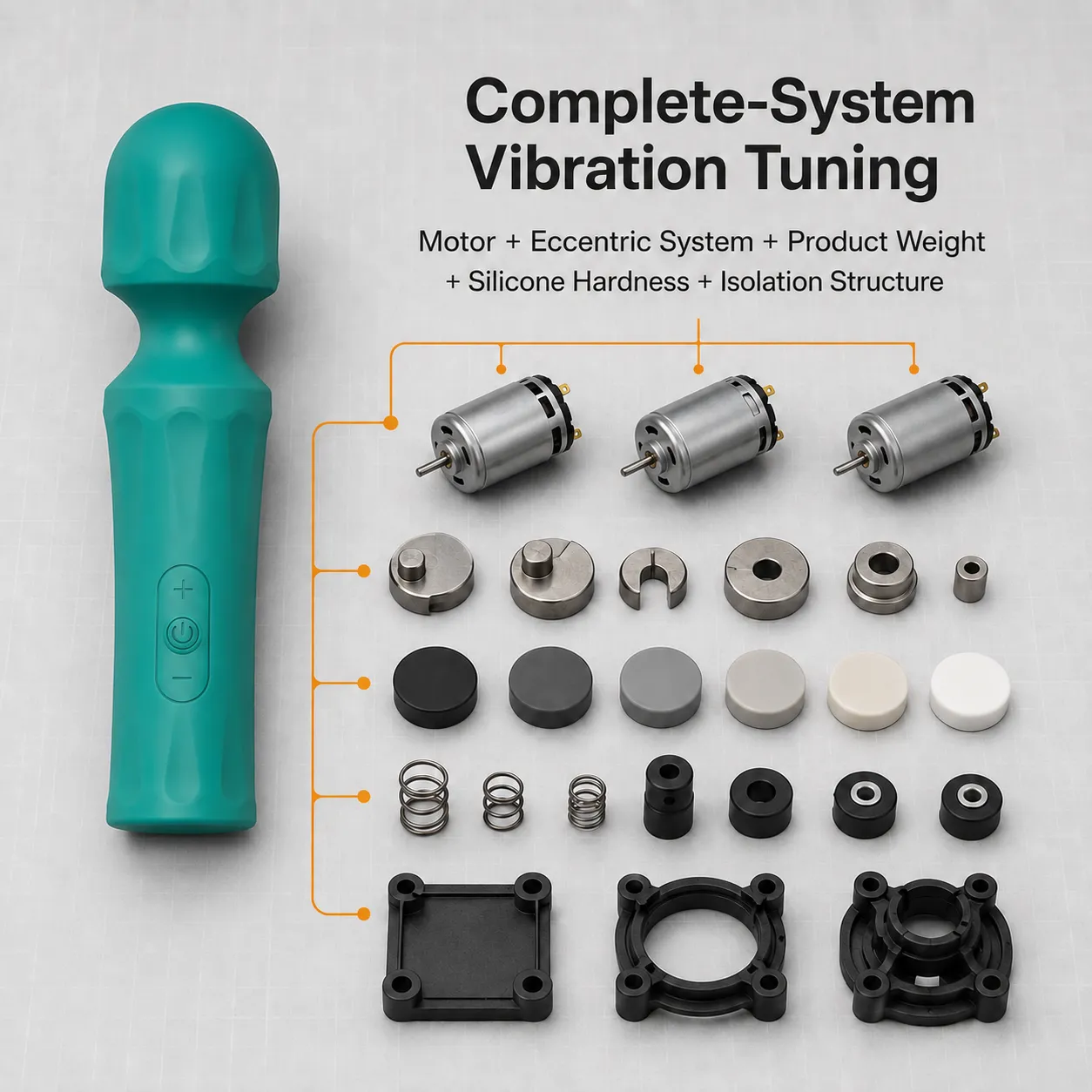
By tuning the motor, eccentric system, operating speed, product weight, silicone hardness, and isolation structure as one system, our engineers can create a deeper vibration without relying only on higher RPM.
The target is a better balance of strong head output, lower hand feedback, controlled noise, and comfortable continuous use. We do not apply one fixed parameter set to every wand. The final configuration depends on dimensions, desired vibration feel, noise target, retail positioning, and customer requirements.
Internal development data
Comparative Test Results
Handle Comfort
Testers used the isolated structure—including at high settings—without experiencing the hand-numbness problem found with the conventional rigid structure.
Operating Noise
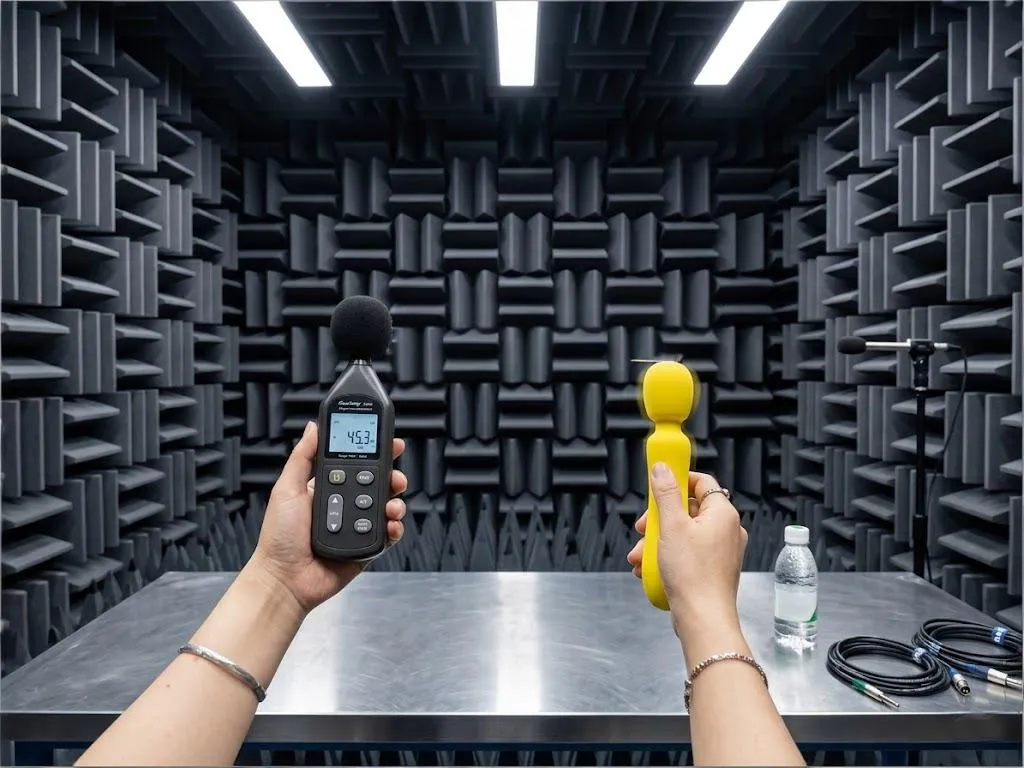
- Distance: 30 cm
- Highest setting
- Normal operation
- Background below 30 dB
Aging and Reliability
Evaluation covered motor performance, structural stability, connection durability, vibration consistency, noise changes, and electrical performance.
Noise figures are Kenier internal test results, not third-party acoustic certification. Exact waterproof and reliability conditions depend on each approved model specification.
Reliability and Production Control
The approved model also completed its specified drop, waterproof, charging, basic electrical, and functional checks. We do not apply unsupported test levels to every wand massager.
Across production, Kenier controls quality through incoming material inspection, in-process checks, functional testing, and final inspection, with a production defect rate below 1%.
Some tungsten-steel motor configurations
These can operate below 35 dB at lower speeds. At higher speeds and frequencies, the same type may reach approximately 40 dB. We therefore do not describe a motor as automatically “silent.” Final noise depends on speed, frequency, structure, product size, and required output.
Conventional vs. Vibration-Isolated Structure
Kenier continues to produce conventional wand massagers for projects that prioritize cost and simple functionality. The vibration-isolated structure is better suited to brands targeting longer-use comfort, lower handle feedback, controlled noise, and a stronger technical point of difference.
| Decision factor | Conventional rigid structure | Vibration-isolated structure |
|---|---|---|
| Head-to-handle connection | Relatively direct and rigid | Mechanically decoupled with flexible isolation |
| Handle feedback | More noticeable, especially at high settings | Greatly reduced for longer-use comfort |
| Development complexity | Simpler, established construction | Requires structural tuning and validation |
| Best fit | Entry-level and cost-focused projects | Premium experience and differentiated private molds |
From engineering concept to a commercial product
From Private Mold to Repeat Orders
The final wand required a different internal architecture, new prototyping, performance tuning, and reliability verification. The U.S. customer approved the solution and moved it into private-mold mass production. The brand continues to place repeat orders.
We cannot publish the customer’s identity, private drawings, or sales information, but the production result demonstrates that the structure moved beyond a laboratory concept into a repeatable commercial product.
- Product color and surface finish
- Brand logo and control interface
- Vibration modes and performance tuning
- Packaging, inner tray, and user manual
- Charging accessories
- Mass-production planning
What This Project Proved
When users complain that a wand massager makes their hand numb, increasing motor power is rarely the complete answer. A stronger motor can make the issue worse if the structure continues to transmit vibration directly into the handle.
- Thicker silicone improved surface comfort but did not isolate structural vibration.
- Internal cushioning did not sufficiently interrupt the rigid transmission path.
- A larger, slower motor improved vibration quality but could not solve handle feedback alone.
- An improved eccentric system helped, but the intermediate rigid connection remained a limitation.
- Mechanically decoupling the head and handle produced the best balance.
- The final result came from engineering a complete mechanical system.
Develop a Lower-Vibration Wand Massager for Your Brand
If your current wand has problems with handle vibration, hand fatigue, operating noise, or an overly “buzzy” sensation, Kenier can review your requirements and recommend an appropriate development direction. NDA support is available before private drawings are reviewed.