

Prototype vs Golden Sample vs Pilot Run: What Should Adult Toy Brands Validate Before Mass Production?
September 10, 2026 by
ellenyi@adultstoysgd.com
Product KnowledgeA functional prototype can work. A signed sample can look correct. Neither fact alone means an adult wellness product is ready for mass production.
For a private-mold project, the more useful question is: what decision is being approved at each stage?
At Kenier Co, a custom project can move through idea review, appearance design, structure development, a first functional sample, revision, a signed sample, a pilot run, and finally mass production. Each stage removes a different type of uncertainty.
Passing one validation gate does not mean the next gate has been passed.
| Stage | Main question | Typical evidence |
|---|---|---|
| Prototype / functional sample | Does the concept and structure work? | Physical sample, function, ergonomics, charging, vibration, noise, sealing and runtime review |
| Revised sample | Were identified problems corrected? | Updated structure/electronics and repeat testing |
| Signed / golden sample | Is this the product definition the buyer approves? | Signed sample, specification, BOM, color/finish and packaging references |
| Pilot run | Does a small sample-mold batch support deeper user and project validation? | Small batch, QC comparison, tester feedback and engineering review |
| Mass-production release | Are the open decisions closed? | Customer sign-off and released drawings/specifications/BOM |
This is not another inspection checklist. It is a way to make the right decision before changing the product becomes more expensive.
◆ Validation Starts Before the First Functional Sample
A custom product may begin with an idea, but the idea still needs engineering review.
Kenier Co typically discusses the use scenario, target user group, target dimensions, functions, structural direction and molding route before tooling. The team needs to know whether the intended shape can hold the required motor, battery, PCB or transmission structure and whether it can be molded and assembled as planned.
The broader link between design review, structural engineering, molds, sampling and production is shown in Kenier Co’s adult toy factory capabilities.
◇ Use a physical 3D model before committing to structure and tooling
After the appearance design is approved on screen, a third-party 3D printing supplier can produce a plastic or silicone model from the 3D drawing.
That physical model lets the buyer and engineering team review real size, proportions, grip, reach and general ergonomics before the project moves deeper into structure and tooling. Problems are cheaper to correct here than after a mold has been opened.
After the appearance direction is confirmed, the structural engineer develops the internal architecture. The structure drawing is reviewed, printed and signed before the project progresses.
Silicone selection should follow the product’s application scenario and shape rather than the product category alone. The team needs to choose an appropriate softness or hardness and a silicone molding temperature that fits the product structure and manufacturing process. Customer and sales-channel requirements also affect the material route. For projects that require ISO 10993-related biological evaluation evidence, Kenier Co can specify a suitable vapor-phase, low-temperature-curing silicone grade with the relevant supplier test documentation for that project. When that level of documentation is not required, vapor-phase high-temperature-curing silicone or precipitation-process silicone may also be considered according to the product design, target feel, processing requirements and buyer specifications. The adult wellness products manufacturing overview provides the wider context for how material, structure and manufacturing choices are matched to different projects.
◆ What Should a Functional Prototype Prove?
The functional prototype answers the first engineering question: does the proposed product work as a physical system?
Depending on the product, review can include:
- appearance, dimensions and ergonomics;
- motor behavior, vibration feel and noise;
- charging, battery behavior and working time;
- buttons, PCB and firmware logic;
- internal structure and transmission parts;
- silicone or soft-surface feel;
- sealing and waterproof performance where specified.
A first functional sample does not prove future production consistency. Its job is to expose engineering problems while the design can still be revised.
For vibration-driven products, noise and vibration should be judged as a finished system rather than from a motor specification alone. Kenier Co explains this relationship in its guide to wand massager noise and weak vibration.
◇ Real example: a sleeve-retention problem found during use testing
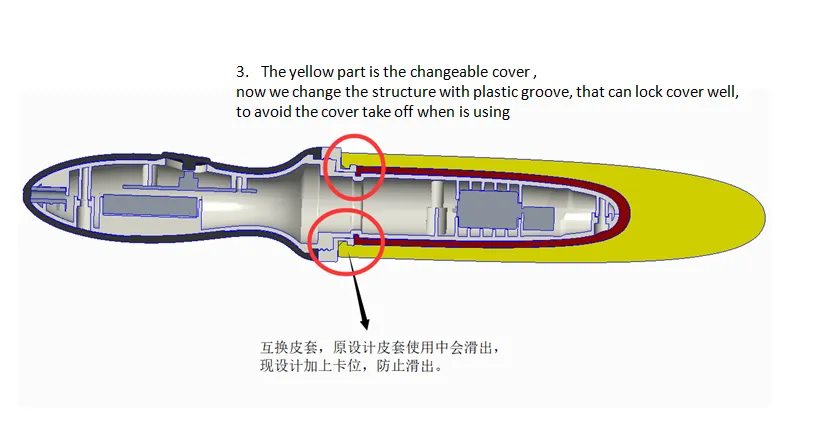
In one dilator-set development project, functional-sample and use testing exposed a risk that the silicone sleeve could slide during use.
The structure was revised to add a locating and retention feature on the main shaft so the sleeve had a defined mechanical stop. The sealing approach was also reviewed.
The change still required the relevant functions and waterproof performance to be validated again. A design intended to improve retention or sealing is not proof of waterproof performance until the finished sample passes the required check.
That is the value of a functional prototype: find a correctable problem before the project reaches a more expensive stage.
For more complex mechanisms, sample approval also needs to confirm that the physical product matches the intended structure, controls and performance. The air-pulse vibrator patent and sample review guide shows a mechanism-specific example.
◆ What Makes a Signed Sample Different?
A functional prototype asks whether the product works. A signed sample asks:
Is this the product definition the buyer and factory are approving?
Some buyers say golden sample or approved sample. Kenier Co commonly uses signed sample. The name matters less than the control behind it.
By this stage, the approved characteristics should be frozen or formally recorded as applicable:
- appearance, dimensions and structure;
- silicone grade, hardness and approved source;
- Pantone color, surface finish and CMF;
- motor, battery, PCB and firmware;
- vibration modes and charging system;
- logo, accessories, packaging, manual and labels;
- applicable material reports, testing requirements and requested market documents.
The signed sample should connect to the current product specification and BOM. A specification can record functional, electrical, material, charging, motor and waterproof requirements; the BOM identifies the approved components and parameters used to build the product.
That is more useful than an email saying “sample approved.”
For remote-control products, the approval record may also need pairing logic, signal behavior and control recovery. Those issues are covered in the remote control sex toys sourcing guide.
◆ What Does a Pilot Run Validate?
In Kenier Co’s workflow, a pilot run can be a small batch made with a sample mold before the final mass-production mold is released.
This route is useful when a brand wants more evidence than one engineering sample can provide. Some larger brands distribute the pilot units to an internal experience team or selected testers and collect structured feedback before committing to full tooling.
As one typical project reference, a sample mold can take around seven days and cost about US$400, followed by roughly 15–20 days to prepare about 50–100 first-batch units. These figures are illustrative, not a fixed quotation or guaranteed schedule; actual cost, quantity and timing depend on the project.
A pilot batch can help evaluate:
- appearance and proportions;
- stimulation point and geometry;
- vibration character and noise;
- working time;
- grip and surface feel;
- real-use experience;
- recurring issues that may not appear in one sample.
For dilator and pelvic-wellness projects, geometry, progressive sizing and handling are central to the product definition. Kenier Co’s OEM vaginal dilator manufacturing page provides the broader product context.
◇ Pilot units still need controlled inspection
QC should compare pilot units with the relevant specification, BOM and approved-sample requirements. Client or tester feedback can then be organized and returned to engineering.
If feedback causes a structural, electronic, material or functional change, the affected BOM, specification and approval records should be updated and sent to the client for confirmation before the project continues.
◆ What Must Be Confirmed Before the Mass-Production Mold?
Before a custom project moves to the mass-production mold, the customer should confirm and sign the relevant design decision.
The release package should reflect the latest approved version, including as applicable:
- final drawings and dimensions;
- signed sample;
- released BOM and product specification;
- materials, silicone, electronics and firmware;
- color, finish, logo and charging requirements;
- packaging, accessories, manual and labels;
- agreed testing and document requirements;
- changes made after the pilot run.
Procurement then sources the specified materials and components and reviews supplier capability. Incoming quality control checks applicable electronic components and materials before production.
Mass-production QC has a different job from prototype validation. It checks released requirements such as appearance, color, surface defects, gaps, function, charging, noise, vibration feel, sealing or waterproof checks where required, aging, surface coating, packaging cleanliness, labels, tamper-evident packaging and accessory completeness.
◆ Pre-Production Validation Matrix
| Buyer question | Functional prototype | Signed sample | Pilot run | Release |
|---|---|---|---|---|
| Does the concept work? | Primary gate | Reconfirm final version | Observe across units | Already resolved |
| Is appearance/ergonomics acceptable? | Evaluate | Freeze direction | Collect broader feedback | Confirm final version |
| Are motor, battery, PCB and firmware defined? | Test direction | Record configuration | Compare units to records | Release BOM/spec |
| Are silicone, color and finish correct? | Evaluate | Approve references | Check batch behavior | Release requirements |
| Is packaging defined? | May be open | Approve where ready | Review if included | Freeze final files |
| Is target-user feedback sufficient? | Limited | Not the main purpose | Important when tester validation is used | Resolve material issues |
| Can this stage replace the next? | No | No | No | Release only after required gates close |
◆ Questions Buyers Should Ask Before Mass Production
Ask the supplier:
- What stage does this sample represent?
- What is still open for change?
- Which drawing, BOM and specification version does it match?
- What exactly becomes frozen when we sign the sample?
- Does this project need a sample-mold pilot batch?
- How will pilot feedback return to engineering?
- Which changes require a revised sample or renewed approval?
- What must be signed before the mass-production mold is opened?
A supplier that can answer these questions clearly is easier to evaluate than one that treats every physical unit as simply “a sample.”
◆ Frequently Asked Questions
◇ Is a functional prototype enough to approve mass production?
Usually not for a new custom product. It proves the concept and physical system, but the signed product definition, pilot feedback where required, packaging and release decisions may still be open.
◇ What is the difference between a golden sample and a signed sample?
The terms can overlap. Kenier Co commonly uses signed sample. The important point is that the approved physical unit is connected to the current specification, BOM and agreed requirements.
◇ Does every adult toy project need a 50–100 unit pilot run?
No. It depends on product complexity, tooling strategy, brand requirements and how much user validation the buyer wants before full tooling. The 50–100 unit example is a project reference, not a universal rule.
◇ What happens if a problem is found after the signed sample?
Review the affected design, component, material, software or process, update the relevant BOM/specification/approval records, and have the customer review the changed version before continuing.
◇ Why test real users before full tooling?
A target-user group can reveal issues with geometry, stimulation point, vibration feel, noise, grip, working time and overall experience that may not be obvious from drawings or one internal sample.
◆ Treat Every Sample as a Decision Gate
Adult toy pre-production validation is not about adding unnecessary steps. It is about making each major investment with better evidence.
A prototype should prove the concept works. A revised sample should show that identified problems were addressed. A signed sample should define what the buyer approves. A pilot run can provide a small batch for deeper product and user validation. Mass production should begin only after the required open questions are closed and the current product definition is approved.
Kenier Co uses this staged approach to help B2B buyers turn an idea into a product that has been reviewed physically, technically and commercially before full production commitment.

Latest Articles
October 14, 2026
What Can Retailers Learn About Sexual Wellness Marketing From a Brand's Customer Community?
Retailers need reasons for customers to pay attention between purchases. Repeating a discount link can leave product questions unanswered, while
October 2, 2026
How Does Sex Toy Logo Customization Work on Existing Products?
You have selected a product and prepared your brand artwork. Adding the logo looks like the easy part—until the supplier
September 29, 2026
How Is a Pornstar Dildo Developed for a Licensed Brand Collection?
A brand may have an adult performer ready to collaborate, yet still struggle to turn that agreement into a product
September 22, 2026
Adult Wellness Repeat Purchase: What Product Teams Should Review After the First Sale
A strong feature can help win a first sale. It does not guarantee the next one. For adult wellness brands,