

Adult Toys for Couples: What Should Brands Evaluate Before Selecting New Products?
July 22, 2025 by
ellenyi@adultstoysgd.com
Business Beginners Market ReportAdult toys for couples are not defined only by a romantic marketing message. A product belongs in this category when its structure, control method, fit, contact position, or interaction logic is designed for shared use or partner control.
For B2B buyers, this distinction matters. A standard vibrator may be used by a couple, but that does not automatically make it a purpose-built couples product. A remote-control egg, vibrating cock ring, couples suction toy, finger vibrator, or C-shaped wearable creates a different product brief because the buyer must evaluate two-user interaction, fit stability, control reliability, packaging instructions, and after-sales risk.
Kenier Co has existing production molds and mass-production experience across several relevant categories, including remote-control eggs, app-controlled eggs, couples suction toys, finger vibrators, vibrating cock rings, and C-shaped or U-shaped wearable vibrators. Brands that need broader manufacturing and customization information can review Kenier Co’s couples vibrator manufacturing capabilities.
◆ What Makes a Product Suitable for Couples?
A couples product usually fits one or more of these product architectures:
- Shared-contact products: designed so the product can create contact or stimulation for two people during the same use scenario.
- Partner-controlled products: worn or held by one person while another person controls the function through a physical remote or app.
- Dual-use products: suitable for solo use but intentionally packaged and explained for partner interaction as well.
- Coordinated product sets: two compatible products or accessories presented with one control, charging, or packaging concept.
The product page and packaging should state which architecture applies. A vague claim such as "made for connection" does not tell the buyer whether the product is wearable, partner-controlled, shared-contact, or simply suitable for dual use.
This article focuses on product selection and evaluation. Broader private label category planning across vibrators, pelvic-floor products, men’s products, BDSM, and other intimate wellness categories belongs on the private label adult wellness products page.
◇ Remote-Control Eggs
Remote-control eggs are compact partner-controlled products. One person wears or holds the device while the partner uses a physical controller.
For a brand or retailer, the main evaluation points include:
- RF signal stability
- Control response
- Pairing between the correct product and remote
- Anti-cross-control planning when several products are tested nearby
- Motor strength under body pressure
- Charging reliability
- Waterproof structure
- Clear pairing and control instructions
Kenier Co’s ML-204 uses an RF physical remote. Its practical control distance is specified within 15 meters for the model. The approved product specification should still define the test environment because walls, interference, battery level, and product orientation can affect real performance.
◇ App-Controlled Eggs
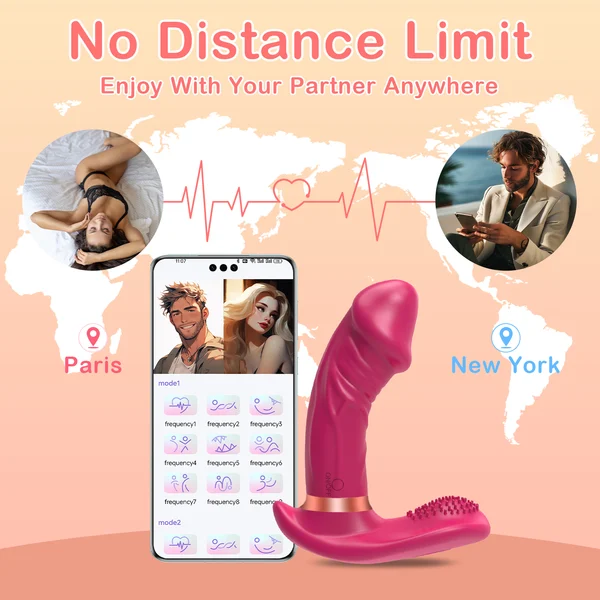
App-controlled eggs add Bluetooth connectivity and may support internet-based partner control.
For the Kenier Co app route described in this article:
- The product uses a third-party PCB with an integrated program.
- Bluetooth connects the product to the app.
- Internet-based long-distance control is supported by the selected third-party system.
- White-label app options are available.
- App updates, servers, user accounts, and privacy-policy responsibilities are handled by the specialist third-party team.
These responsibilities should be confirmed in writing before sampling. The factory, PCB provider, app team, brand, and distributor may each manage different parts of the finished solution.
Brands that need deeper information on Bluetooth, app coordination, electronics, documentation, and smart-product development should use the app-controlled sex toy OEM/ODM guide.
◇ Couples Suction Toys
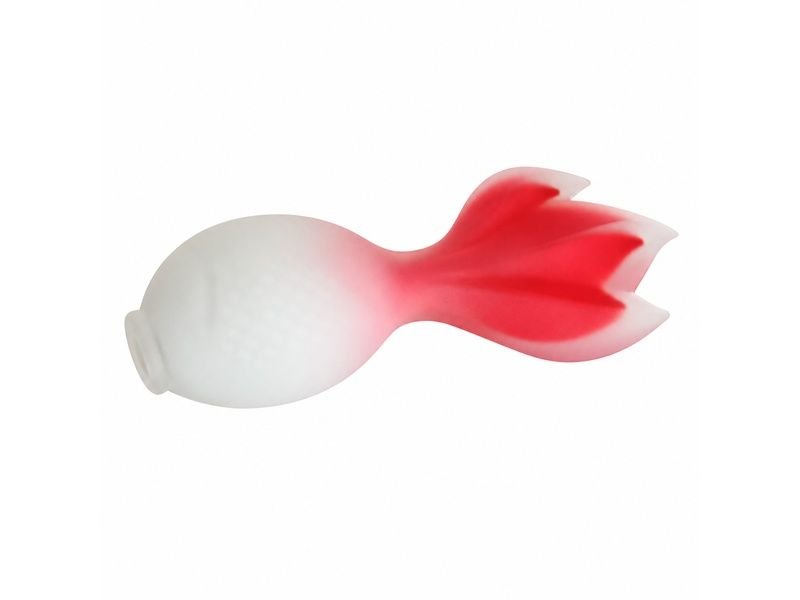
Couples suction toys use air-pulse or suction architecture rather than relying only on conventional vibration. Their retail value depends on more than the number of modes.
Buyers should review:
- Nozzle shape and softness
- Contact stability
- Pressure consistency
- Noise at different settings
- Motor and air-path structure
- Waterproof sealing
- Cleaning geometry
- Button placement
- Charging method
- Packaging claims that accurately describe the function
Suction vibrators currently receive strong buyer interest in Kenier Co’s inquiry mix. That is an internal commercial observation, not a claim that every market or retailer will produce the same demand.
◇ Finger and Palm Vibrators
Finger vibrators and palm vibrators can function as compact partner-use accessories. Their suitability for couples depends on grip, control access, contact accuracy, weight, noise, and whether the product can be used comfortably without blocking the intended contact area.
Finger and palm vibrators also receive strong buyer interest. However, they should not automatically be described as purpose-built couples toys. The brand should decide whether the SKU is presented as:
- a couples accessory;
- a compact solo product;
- a dual-use product;
- part of a gift set.
For broader sourcing across suction toys, egg vibrators, wearable products, and other women’s electronic categories, buyers can review the custom female adult toy product range.
◇ Vibrating Cock Rings
A vibrating cock ring combines an elastic silicone structure with a motor module. The product brief must control both the ring geometry and the powered components.
One common Kenier Co reference configuration uses:
- 3.5 cm unloaded inner diameter
- 1 cm band width
- 3 mm thickness
- Shore A 20 silicone
Single-ring and double-ring structures are available according to the project. Kenier Co also supports non-powered full-silicone rings, motorized rings, physical remote-control versions, and app-controlled versions.
The factory records at least 10 cm stretch capability for the reference route, but a buyer should not use that statement without defining the measurement method. The specification should state whether the value refers to linear extension, final opening, circumference, mandrel size, hold time, and recovery condition.
The buyer should confirm:
- unloaded dimensions;
- cross-section;
- silicone hardness;
- stretch force;
- recovery after extension;
- tear risk around the motor housing;
- balance and rotation;
- heat;
- sealing;
- charging-contact placement.
◇ C-Shaped and U-Shaped Wearable Vibrators
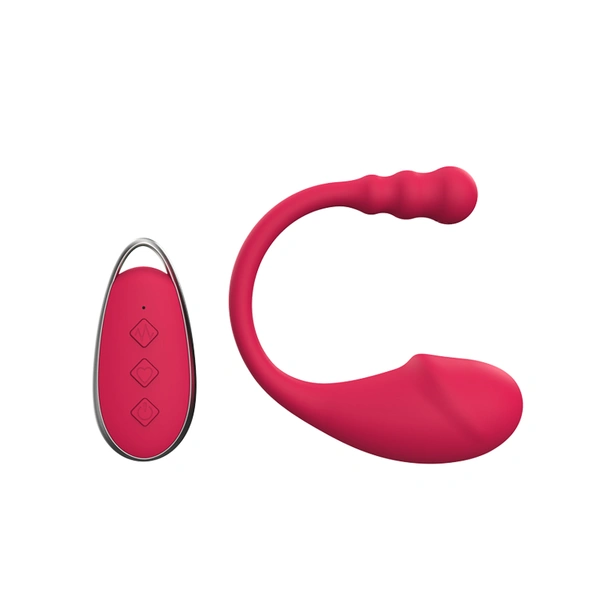
C-shaped and U-shaped wearables require stable contact at more than one point. Their performance depends on geometry, flexible structure, weight distribution, motor placement, and how the product behaves under movement and body pressure.
One current reference product is approximately:
- 20 cm long
- 3.5 cm wide
- 0.25 kg
The same category can use a single motor or dual motors depending on the brand’s market needs. The dimensions are not universal; other models differ in length, curvature, contact spacing, weight, and flexible tension.
Sample review should check:
- whether the product stays in position;
- whether both contact zones align as intended;
- whether the structure is too rigid or too flexible;
- whether the weight causes movement;
- whether the motor remains effective under pressure;
- whether buttons can be reached without accidental activation.
A strong couples-product brief should explain whether the device supports shared contact, partner control, solo use, or more than one scenario.
This affects:
- product naming;
- hero images;
- instruction content;
- gift-box presentation;
- product-page claims;
- the number of accessories;
- customer expectations.
Dual-use capability can expand merchandising options, but it should be real. A standard palm vibrator does not become a specialized couples product simply because the packaging shows two people.
For brands, the practical question is:
Which product feature creates the couples use case?
The answer may be the ring geometry, wearable shape, remote control, long-distance app function, shared-contact structure, or coordinated set.
◆ How Should Brands Compare RF, Bluetooth, and Internet Control?
Control architecture changes both the product experience and the supplier responsibility.
| Control Method | Typical Role | Main Buyer Checks |
|---|---|---|
| On-product buttons | Direct local control | Button access, mode logic, accidental activation |
| Physical RF remote | Close-range partner control | Range, pairing, anti-cross-control, replacement remote |
| Bluetooth app | Smartphone control near the product | Pairing, reconnection, phone compatibility, interference |
| Internet app control | Long-distance partner control | App account, server, privacy policy, updates, service continuity |
RF and Bluetooth should not be treated as interchangeable.
The ML-204 physical remote uses RF and is specified for control within 15 meters. App-controlled models use Bluetooth between the product and phone, while the selected third-party app system supports internet-based partner control.
For app products, the buyer should document:
- who supplies the PCB and firmware;
- who maintains the app;
- who operates the server;
- who controls user accounts;
- who writes and updates the privacy policy;
- what happens if the third-party service changes;
- how replacement PCBs and repeat orders are managed.
These questions belong in the commercial and technical agreement, not only in a marketing presentation.
◆ Fit, Retention, and Contact Position Need Sample Evidence
Couples products can fail even when every electronic function works.
A wearable may connect correctly and produce strong vibration but still move out of position. A cock ring may function but use the wrong diameter, cross-section, or silicone hardness. A finger vibrator may be too heavy or place the control button where it is difficult to operate.
Sample approval should therefore evaluate the complete product rather than a motor or PCB alone.
Useful fit checks include:
- approved dimensions;
- weight;
- flexible tension;
- contact-point spacing;
- grip or retention method;
- motor-housing position;
- charging-contact position;
- button accessibility;
- product behavior under reasonable movement and pressure.
The same model should be evaluated across several samples because one prototype cannot prove production consistency.
◆ Motor, Noise, Charging, and Waterproofing Are Model-Specific
Couples products may use single motors, dual motors, air-pulse motors, or different motor positions according to the structure.
A stronger motor is not automatically better. Motor selection affects:
- product weight;
- vibration transfer;
- noise;
- battery demand;
- heat;
- waterproof structure;
- contact stability.
Kenier Co supports magnetic charging, pin charging, and Type-C charging according to the product design.
Each charging route needs different checks:
- contact alignment;
- cable retention;
- charging feedback;
- port sealing;
- repeated connection;
- accessory placement in the package;
- compatibility with repeat orders.
Waterproof and noise claims must stay model-specific.
For example:
- ML622 is a full liquid-silicone overmolded palm vibrator that supports IPX8.
- ML168 can reach 32 dB when measured at a 30 cm test distance.
These figures should not be applied to other products. A new SKU needs its own test conditions, approved sample, and acceptance criteria.
◆ What Should Brands Test During Sample Approval?
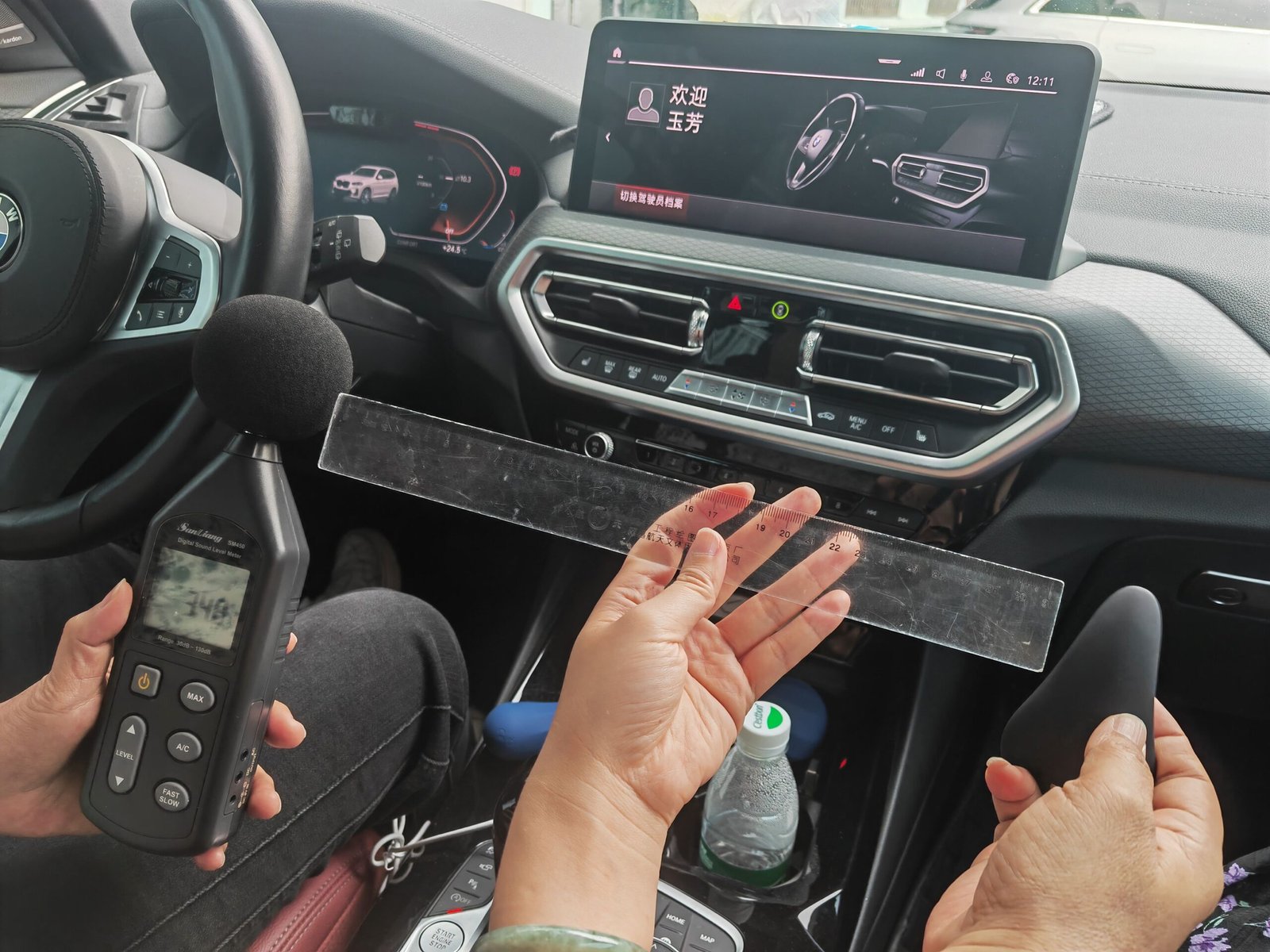
A couples-product sample plan should match the selected architecture.
| Area | Example Check | Buyer Objective |
|---|---|---|
| Appearance | Color, silicone surface, seams, logo | Confirm retail presentation |
| Dimensions | Ring diameter, wearable length, contact spacing | Confirm approved fit geometry |
| Motor | All modes, single/dual motor response | Confirm intended performance |
| Pressure | Run the product under defined contact pressure | Detect weakened transfer or stalling |
| Noise | Measure at an agreed distance and environment | Compare samples consistently |
| RF remote | Range, pairing, response, nearby-product interference | Confirm partner-control reliability |
| Bluetooth | Pairing, reconnection, repeated sessions | Reduce connection complaints |
| Internet app | Account, remote session, control response | Confirm long-distance function |
| Charging | Magnetic, pin, or Type-C connection | Confirm stable charging |
| Waterproofing | Model-specific test method | Support the intended claim |
| Aging | Repeated operation and charging | Identify functional drift |
| Packaging | Product restraint, cable placement, instructions | Reduce damage and setup confusion |
Kenier Co’s established QC process can include incoming material inspection, production inspection, assembly inspection, waterproof testing, aging testing, charging testing, vibration testing, and packaging inspection.
Buyers evaluating the wider production system can review Kenier Co’s adult toy factory and quality-control capabilities.
◆ Which Problems Can Increase Return Risk?
Kenier Co has previously encountered three relevant issue types in connected and electronic products:
- excessive noise;
- Bluetooth disconnection;
- water ingress.
The factory reports controlling its overall quality defect rate below 1% in recent years. That internal rate should not replace model-specific acceptance criteria.
For a new couples product, risk reduction should focus on:
- agreeing on the noise test distance;
- checking Bluetooth reconnection rather than only first pairing;
- confirming enclosure and charging-area sealing;
- comparing bulk units with the approved sample;
- locking the correct PCB, motor, battery, and charging components;
- providing instructions that clearly explain control and charging.
A low historical defect rate is useful, but it does not prove that a new structure, app route, or motor configuration will perform identically.
◆ Packaging Should Explain the Product Architecture
Kenier Co supports gift boxes and discreet packaging for couples products.
The package should help the buyer communicate:
- whether the product is shared-contact or partner-controlled;
- whether it uses RF, Bluetooth, or internet app control;
- which charging accessory is included;
- how to pair the correct product and controller;
- which functions require a third-party app account;
- who provides app and privacy information;
- model-specific waterproof and noise claims;
- material and battery information where required.
Discreet presentation does not mean vague instructions. A minimal outer design can still include a clear manual, pairing guide, charging information, and QR setup route inside the package.
◆ What Should Buyers Confirm With a Supplier?
Before approving adult toys for couples, buyers should ask for a model-specific answer to each of these questions:
- Is the product purpose-built for shared use, partner control, or dual use?
- Which dimensions and fit points are controlled?
- Is the product manual, RF remote, Bluetooth app, or internet-app controlled?
- Who supplies and maintains the PCB, app, server, accounts, and privacy policy?
- Which motor and battery configuration is approved?
- Which charging method is used?
- What waterproof and noise claims apply to the exact model?
- Which tests are completed on samples and bulk units?
- Which components are locked for repeat orders?
- Does the packaging explain pairing, charging, control, and app responsibilities?
The supplier should be able to connect the product concept to a measurable specification, an approved sample, a production checklist, and clear user-facing information.
◆ Frequently Asked Questions
◇ Which products are commonly developed as adult toys for couples?
Common directions include remote-control eggs, app-controlled eggs, couples suction toys, finger vibrators, vibrating cock rings, and C-shaped or U-shaped wearable vibrators.
◇ Is every remote-control vibrator a couples product?
Not automatically. A product becomes a couples-product SKU when its control logic, positioning, packaging, and product information are intentionally designed for partner interaction.
◇ What is the difference between RF remote and app control?
A physical RF remote supports close-range partner control without requiring a phone. App-controlled products use Bluetooth to connect the product to a smartphone and may support internet-based long-distance control through the selected app system.
◇ Can a couples cock ring use remote or app control?
Yes. Kenier Co supports non-powered silicone rings, motorized rings, RF remote-control versions, and app-controlled versions according to the product brief.
◇ Should every couples product claim IPX8 or low-noise performance?
No. IP rating and noise must be supported by the exact product structure and test conditions. ML622 supports IPX8, while ML168 reaches 32 dB at a 30 cm test distance; those results are model-specific.
◆ Conclusion
Adult toys for couples need a clearer product brief than a general relationship message.
The buyer must define what creates the shared-use or partner-control experience, then validate fit, retention, contact position, motor behavior, RF or Bluetooth reliability, app responsibility, charging, waterproofing, packaging, and bulk consistency.
Kenier Co has mature molds and production experience across remote-control eggs, app-controlled eggs, couples suction toys, finger vibrators, vibrating cock rings, and C-shaped or U-shaped wearable vibrators. The strongest development process connects each product claim to an exact model, approved sample, test method, packaging explanation, and repeat-order standard.

Latest Articles

October 14, 2026
What Can Retailers Learn About Sexual Wellness Marketing From a Brand's Customer Community?
Retailers need reasons for customers to pay attention between purchases. Repeating a discount link can leave product questions unanswered, while
October 2, 2026
How Does Sex Toy Logo Customization Work on Existing Products?
You have selected a product and prepared your brand artwork. Adding the logo looks like the easy part—until the supplier
September 29, 2026
How Is a Pornstar Dildo Developed for a Licensed Brand Collection?
A brand may have an adult performer ready to collaborate, yet still struggle to turn that agreement into a product
September 22, 2026
Adult Wellness Repeat Purchase: What Product Teams Should Review After the First Sale
A strong feature can help win a first sale. It does not guarantee the next one. For adult wellness brands,